How to Use Plumbers Tape on Brass, PVC, Stainless and Steel
How to Use Plumbers Tape on Brass, PVC, Stainless and Steel
Direct answer
Use PTFE tape only on connections designed to seal at the threads and where the fitting manufacturer permits it. Brass, stainless steel, carbon steel and PVC require different checks for damage, galling, sealant compatibility and tightening. Select the tape for the medium and operating conditions; the fitting material alone does not determine the width or number of wraps.
 | By Liu Yingbao Engineer · 20 years experience in PTFE line |
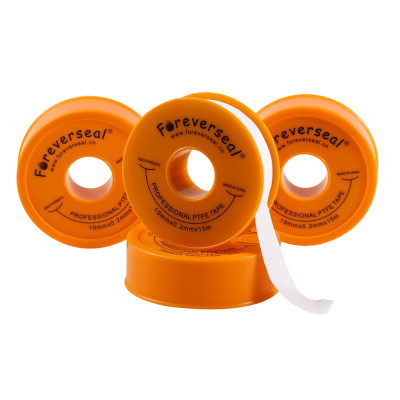
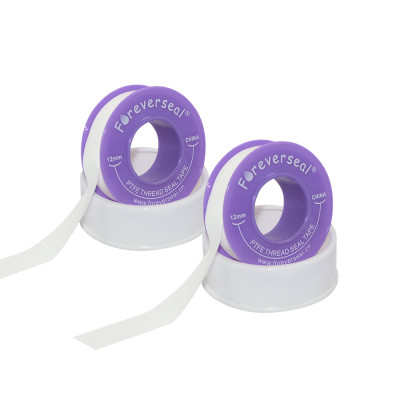
Knowing how to use plumbers tape means identifying both the material and the seal location. A brass compression fitting and a brass tapered pipe fitting can require different methods. Start with the ForeverSeal PTFE tape range and the component instructions.
1. Identify the Seal Before Comparing Materials
| Connection design | Primary seal location | General tape decision |
|---|---|---|
| Suitable tapered pipe joint | Mating threads | Tape only as specified |
| Flare fitting | Flare seat | Do not tape the seat |
| Compression fitting | Ferrule or compression element | Do not add tape to the nut threads unless instructed |
| O-ring or washer connection | Separate sealing element | Tape does not replace it |
| Solvent-welded plastic joint | Solvent-cemented socket | Thread tape has no role in that joint |
A threaded end may be only one side of an adapter. Evaluate each interface separately, and do not infer a thread standard from appearance alone.
2. Plumbers Tape on Brass Fittings
Inspect the male and female threads for damage, contamination and matching form. A coating of tape cannot correct cross-threading or an incorrectly selected adapter.
For a permitted taped pipe joint, apply the chosen strip to clean male threads in the tightening direction, keeping the bore clear. Start engagement carefully and follow the component's tightening method. Brass components can deform or be damaged by excessive loading; an apparently easy rotation after lubrication does not justify additional torque.
For documented water applications, compare ForeverSeal Aqua PTFE tape for plumbing fittings.
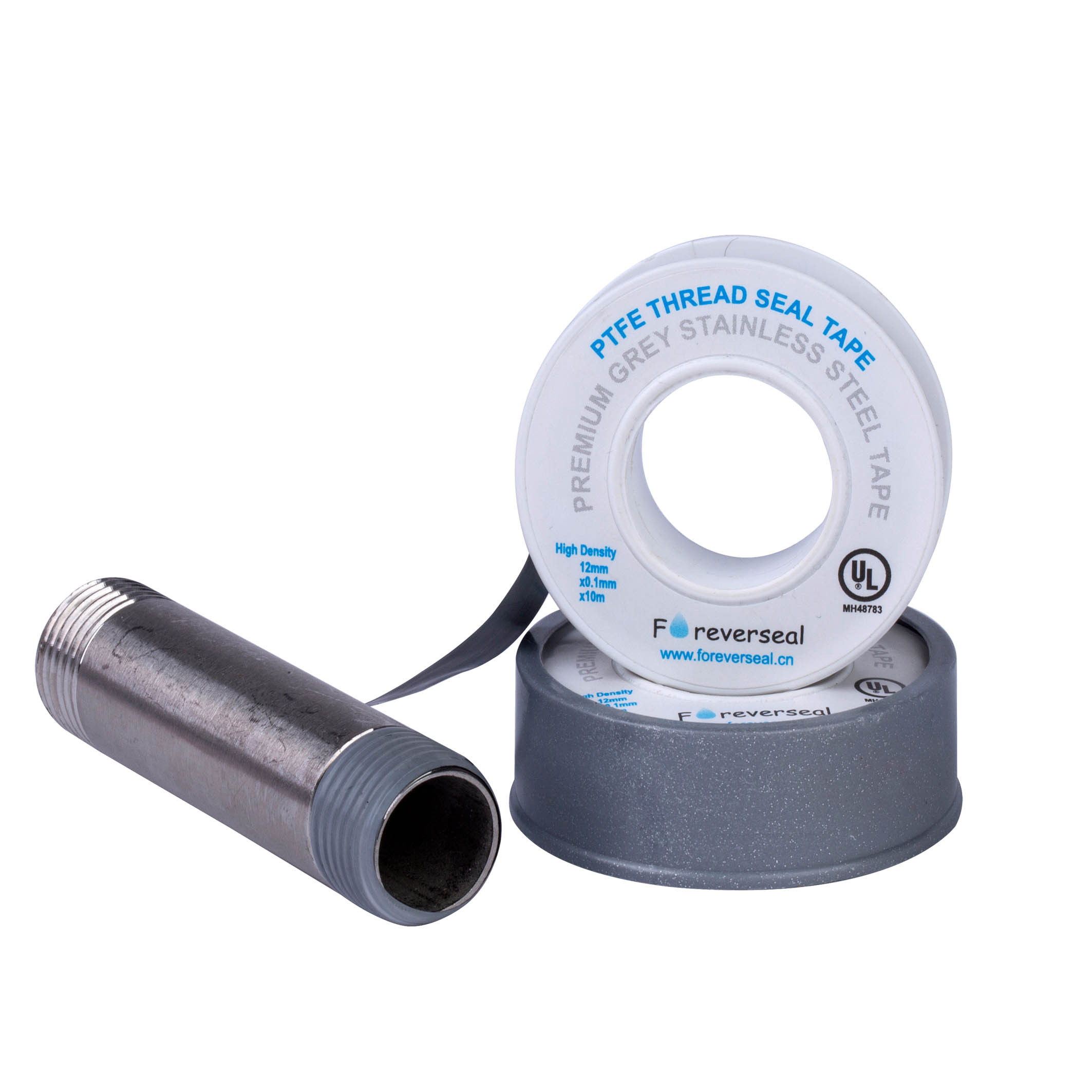
Stainless-oriented tape reference. Verify the current model documentation; packaging color alone does not establish composition or approval.
3. PTFE Tape for Stainless Steel: Address Galling Separately
Stainless threaded assemblies can gall: sliding contact under load can produce localized adhesion and damage. A joint that starts to seize should not be forced simply because more rotation is expected.
Sealant selection and galling control overlap, but they are not identical tasks. A product may help reduce friction without guaranteeing protection against galling under every material pairing and assembly condition. Surface condition, cleanliness, thread fit and the assembly procedure still matter.
Gray color alone does not establish an anti-seize formulation. Verify the current Industrial Pro documentation and use an assembly procedure suited to the material pairing.
Discuss ForeverSeal Industrial PTFE tape for steel and stainless applications. Do not substitute oil or an anti-seize compound into oxygen service without service-specific approval.
4. PVC Connections: Plastic Threads Can Also Use Tape
PTFE tape is not limited to brass-insert PVC adapters. Factory-moulded plastic pipe threads also exist, and some manufacturers explicitly specify PTFE tape for them. Decide by the sealing interface and the component instructions, not by whether metal is visible.
Identify the Joint Before Choosing a Sealant
| PVC connection | How it seals | PTFE tape decision |
|---|---|---|
| Plain solvent-cement socket | Compatible solvent cement bonds the spigot and socket | No tape; follow preparation and curing instructions |
| Factory-moulded plastic pipe threads | Approved sealant at mating threads | Tape only when the component manufacturer permits it |
| Brass-insert threaded adapter | Thread sealant or a separate seal, depending on design | Check the actual interface; a brass insert alone is not permission |
| Union with an O-ring or gasket | Elastomer or gasket face | Do not tape the union nut threads |
| Rubber-ring socket | Compressed sealing ring | No thread tape at the socket |
A socket-by-thread adapter has two different interfaces: solvent cement on its plain socket side and the specified sealing method on its threaded side. Keep cement and primer away from threaded sealing surfaces.
Solvent Welding Is Different from Heat Fusion
In PVC installation literature, “solvent welding” means solvent-cement jointing: the mating surfaces soften and bond as the joint cures. It is not the heated-tool fusion commonly used for some other plastics. Plastic systems also include threaded, gasketed and mechanical joints, so “all plastic fittings are welded” is too broad.
Why Plastic Female Threads Need Extra Care
A tapered male thread wedges into the female fitting. Excess tape and excessive tightening can increase loading on the plastic wall. A brass insert does not remove the surrounding plastic body's assembly limits. Check thread compatibility, maximum engagement and the approved transition design; do not assume every metal-to-plastic pairing is acceptable.
A published PVC manufacturer's technical note reports thermal expansion at about five times that of steel. This is a useful explanation of temperature sensitivity in mixed-material joints, not a universal material constant or a torque calculation. Avoid pipe strain and follow the exact component instructions as temperature changes.
Another plastic-component guide specifies tape at least 3.5 mil (0.0889 mm) thick where tape is used on its covered parts. That is a manufacturer-specific requirement, not a minimum for every PVC fitting. Do not infer permission from thickness alone, or substitute an unverified paste: sealant ingredients must also be compatible with the plastic.
5. Carbon Steel, Black Iron and Galvanized Threads
Inspect cut threads, corrosion, burrs and protective coatings. Clean the sealing zone without damaging it, and replace unsuitable parts rather than adding tape to bridge a defect.
Tape selection depends on the medium as well as the metal. Steel carrying water, fuel gas, compressed air or a process chemical does not automatically use one common tape grade. A general material temperature value does not establish a complete pressure-temperature rating.
For a fuel-gas pipe joint, review ForeverSeal GasSafe gas-rated PTFE tape and confirm the covered model and applicable documentation. Fuel-gas suitability does not establish oxygen compatibility.
6. How Width, Density and Technique Affect Wrap Count
Choose width to suit the usable threaded length. Specify thickness and density separately, then control direction, tension, overlap and finish. A fixed material rule such as “five turns for brass, three for PVC” omits too many variables.
For example, the supplied ForeverSeal Aqua AQ-W12-T10-D4 and Industrial ID-W12-T10-D10 specifications both use 0.10 mm tape, while their nominal densities are 0.4 and 1.0 g/cm³ respectively. Equal thickness and turns do not imply equal material mass or equivalent application suitability.
Those figures are manufacturer model data, not comparative sealing tests. For the full reasoning, see PTFE tape turns, layers and thread size and the step-by-step thread tape installation guide.
7. Assembly and Testing: Verify the Complete Connection
Make the system safe, inspect and prepare the components, apply the permitted sealant, assemble without cross-threading and follow the prescribed tightening method. Do not assume that backing off for alignment preserves the seal.
Use the specified commissioning method and acceptance criteria. There is no universal test pressure for all four materials or all services. Never check gas leaks with a flame, and do not improvise a compressed-gas test on equipment not designed for it.
8. Match the Product to Your Fitting with ForeverSeal
Send the exact fitting design and material, thread standard, size, fluid, operating conditions and applicable approval requirements. Include any component restrictions on tape or paste. ForeverSeal can discuss available specifications and documentation for your evaluation.
For water applications, explore ForeverSeal water supply sealing solutions.
9. Frequently Asked Questions
Is plumbers tape suitable for every brass fitting?
No. Identify the sealing interface first. Compression, flare and washer-sealed connections differ from tapered pipe joints.
Does PTFE tape prevent stainless steel galling?
Do not treat it as a universal guarantee. Confirm the product's documented purpose and the complete assembly procedure.
Is PTFE tape only for PVC fittings with brass inserts?
No. Some factory-moulded plastic pipe threads also use manufacturer-specified PTFE tape. Plain solvent-cement sockets and O-ring union nuts use different sealing methods.
Can I use the same tape on steel water and gas lines?
Only if the exact product is documented for both applications and all other requirements are met. Metal type alone is insufficient.
How many wraps should I use on mixed metal and plastic threads?
Use an explicitly permitted component combination and its confirmed assembly procedure. Do not derive the count from the two material names alone.