How to Use Teflon Tape: Step-by-Step for Leak-Free Threads
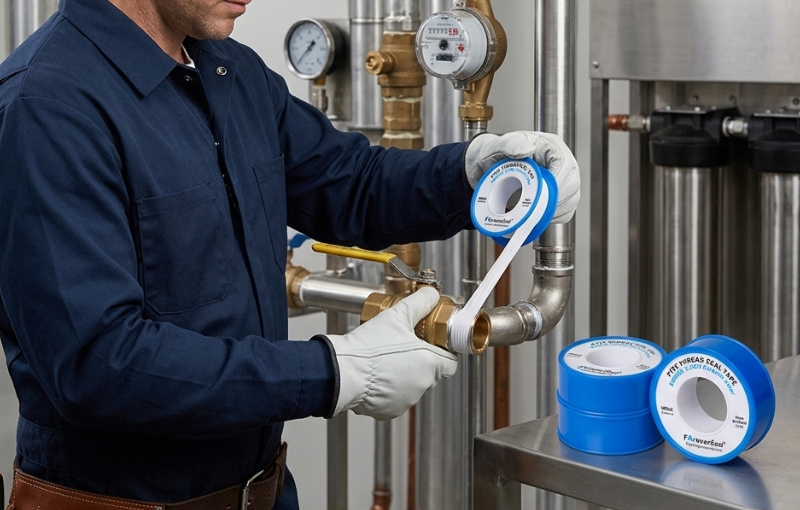
Clean the threads, wrap with the direction of the threads, press the tape in, then tighten the joint. That is the whole method in one sentence — but the details behind each step determine whether your threaded connection stays dry for ten years or starts weeping within a week. This guide walks through how to use Teflon tape (also called PTFE tape or plumber’s tape) correctly, with the wrap counts, direction rules, and grade-matching logic that professional plumbers actually follow.
Why it matters: according to the U.S. EPA WaterSense program, minor household leaks waste more than 1 trillion gallons of water each year in the United States, and the average household leaks about 10,000 gallons annually — much of it from loose threaded fittings that a correctly applied wrap of pipe thread tape would have sealed. EPA even recommends pipe tape as the fix for leaking showerhead and hose-bib connections.
How to Use Teflon Tape Correctly: Preparation and Materials
Before you touch the tape, get three things right: the tape grade, the thread condition, and your tools. Ninety percent of failed seals trace back to skipping one of these.
What you need
- The right tape grade — standard-density white tape for water lines up to 3/4 inch; high-density yellow gas-rated tape for natural gas and LPG; oil-free green tape for oxygen lines. Never substitute white tape on a gas joint.
- Thread cleaning — a wire brush or clean rag to remove old sealant, dirt, and metal burrs. Threads must be dry before wrapping.
- Basic tools — two pipe wrenches or a wrench plus a backup to hold the fitting, so you torque the joint without twisting the pipe.
Quality standards to look for
Not all rolls are equal. U.S. military specification MIL-T-27730A requires a minimum thickness of 3.5 mils and a minimum PTFE purity of 99%; the commercial standard A-A-58092 adds a minimum density of 1.2 g/cm³. European buyers should look for BS 7786:2006, and any tape used on fuel-gas threads in the U.S. must be listed to ASTM D3308 per the Uniform Plumbing Code. A tape meeting these specs seals more reliably with fewer wraps — and shreds far less.
Not sure how many wraps or which grade your joint needs? Use our thread tape calculator for wrap guidance before you start — it takes 30 seconds and removes the guesswork.
Step-by-Step: Wrapping Teflon Tape Around Pipe Threads
Here is the full procedure, the same way production fitters and plumbing crews apply it. Total time for one joint: under two minutes.
- Shut off and depressurize the line. Close the upstream valve and open a downstream tap to confirm zero pressure before disassembling anything.
- Clean the male threads. Brush off old tape, pipe dope, and debris. Wipe dry. Any grit left under the tape becomes a leak path.
- Face the thread end toward you. Hold the fitting so the male thread points at you — this makes the wrap direction obvious (see the next section).
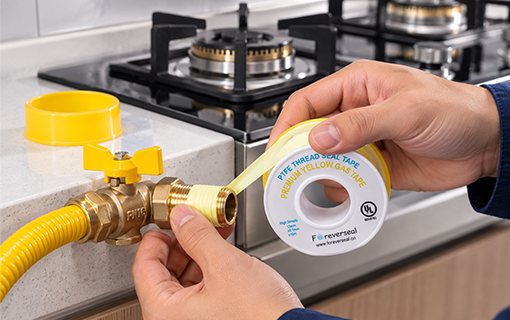
- Align the tape start. Press the tape end against the threads about one full thread back from the pipe end, leaving the first thread exposed so tape shreds cannot enter the system.
- Wrap in the thread direction with steady tension. Stretch the tape slightly (PTFE tape is designed to be pulled taut) so it beds into the thread valleys, and overlap each pass by about 50%.
- Apply the correct number of wraps. For most 1/2-inch to 3/4-inch water joints, 4 to 6 wraps of standard-density tape is the working range. High-density gas tape needs fewer — typically 2 to 3. See the table below.
- Tear and smooth the tail. Pull the tape tight and tear it against the thread edge so the tail presses flush into the wraps. A loose tail bunches up and prevents full thread engagement.
- Tighten the joint. Thread the mating fitting on by hand until snug, then wrench-tighten roughly a quarter to half a turn past hand-tight. Do not chase extra turns — over-tightening distorts the tape and the threads.
Teflon Tape Direction: Wrap With the Threads, Not Against Them
This is the single most common mistake. Right-hand threads tighten clockwise when viewed from the pipe end — so the tape must also be wound clockwise. Wrap it counter-clockwise and the tightening action unrolls the leading edge every time the fitting turns, squeezing the tape out of the thread valleys and leaving a metal-to-metal leak path. A two-second check before you start: point the fitting end at you, turn the pipe as if tightening, and confirm the tape edge does not lift. If it lifts, you are going the wrong way — unwrap and reverse.
How Many Wraps of Teflon Tape Do You Need?
There is a real engineering answer, not folklore. The tape works by filling the helical gap between mating threads, so the required wrap count scales with thread size, tape density, and pressure. Industry guidance for standard-density tape falls between 3 and 6 full wraps, tightening to 2–3 for high-density grades. Use this table as a starting point, then verify with a pressure test:
| Joint type | Tape grade | Typical wraps | Notes |
|---|---|---|---|
| 1/8–3/8 in NPT water, air | White standard density | 3–4 | Use 1/4 in wide tape on small threads |
| 1/2–3/4 in NPT water | White standard density | 4–6 | 1/2 in wide tape; most common household size |
| 1/2–2 in fuel gas (NG/LPG) | Yellow, gas-rated to ASTM D3308 | 2–4 | High density; never use white tape — code violation per IFGC 403.6 |
| Potable water, 1/2–2 in | Pink medium/high density | 3–5 | Higher strand count resists shredding |
| Oxygen / medical gas | Green oil-free PTFE | 3–5 | Tape must be certified grease-free |
| Stainless fittings | Gray nickel-containing | 3–5 | Anti-galling and anti-seizing |
More is not better. Past about 7 wraps on a standard joint, the tape layer prevents threads from seating fully, the fitting bottoms out early, and the joint is actually less tight than with fewer wraps — plus excess tape shreds into the line.
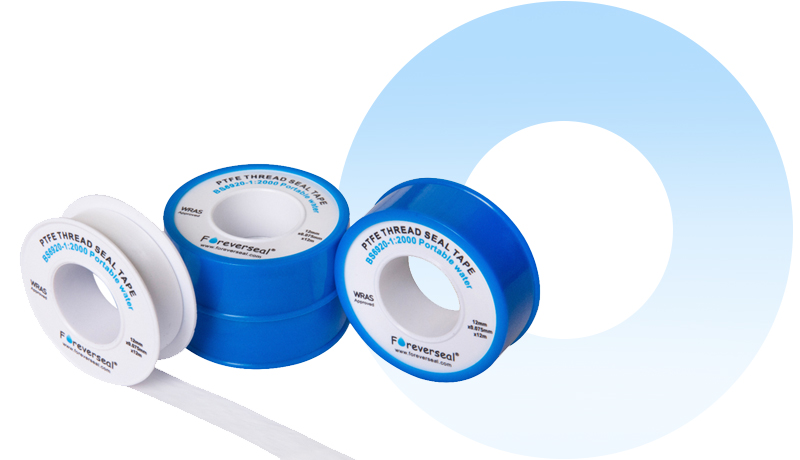
Working on a water supply or drainage system? The matched grades and application notes in our water supply and drainage sealing solutions guide pair directly with the wrap counts above, and ForeverSeal Aqua PTFE tape for plumbing is the WRAS-listed grade most crews reach for on potable-water threads.
Common Teflon Tape Mistakes That Cause Leaks
Every one of these shows up in warranty returns and call-backs. The fix costs seconds.
- Wrapping against the thread direction — the tape unrolls as you tighten; the joint leaks immediately or on first thermal cycle.
- Covering the first thread — tape overhangs the pipe end, shreds into the water or gas stream, and can foul valve seats and aerators.
- Wrapping too loose — slack tape bridges over thread crests instead of bedding into the valleys, leaving a continuous spiral leak path.
- Using the wrong grade — standard white tape on a gas line is both a code violation and a hydrocarbon-degradation hazard; thin economy tape on high-pressure air weeps within days.
- Sealing flare fittings or compression joints — these seal on machined metal faces or ferrules, not threads; UPC 1210.2 explicitly prohibits tape on flare fittings.
- Taping female threads — the convention (and IFGC 403.6 wording) is male threads only; tape inside a female thread blocks proper engagement.
- Skipping the cleaning step — new tape over old dope or grit does not bond into the thread valleys; the joint re-leaks at the old fault line.
- Reusing a taped joint — once a taped connection has been disassembled, the tape is deformed; clean it off and rewrap fresh.
How to Test the Seal After Applying Plumber's Tape
A joint is not done when it looks tight — it is done when it holds pressure. Run through this sequence before you close up a wall or move to the next fitting:
- Confirm thread engagement. At least 4 to 5 full thread turns should be engaged on a standard NPT joint. Fewer turns means the tape is doing the sealing the threads should do — it will creep.
- Slow pressurize. Open the valve gradually. A sudden slam of line pressure can shift a freshly seated joint.
- Dry-check every connection. Wipe each joint with a paper towel, then watch. For water, a slow bead forming at the thread base means re-tighten a quarter turn; if it persists, disassemble and rewrap.
- Soap-solution test for gas and air. Brush a 1:1 dish-soap solution on the joint; growing bubbles indicate a leak. For fuel-gas work this is not optional — it is the standard acceptance test.
- Recheck after 24 hours on new installations. Thermal cycling exposes marginal joints that pass an initial test.
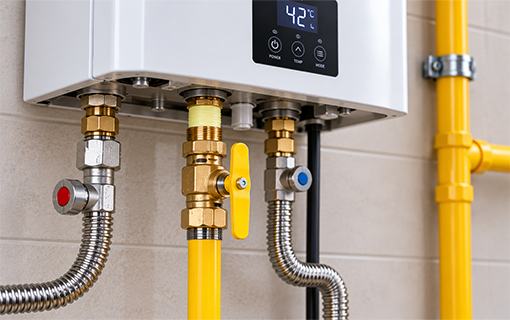
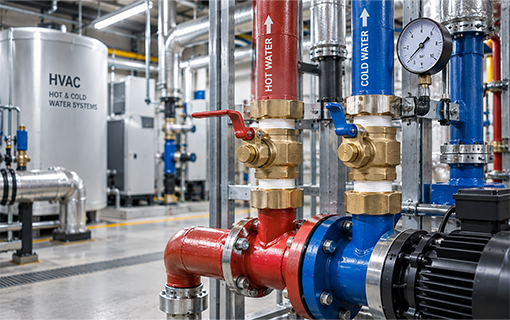
Keep the context in mind: EPA WaterSense estimates that 10% of U.S. homes have leaks wasting 90 or more gallons per day, and that fixing easily corrected household leaks saves about 10% on water bills. A two-minute rewrap of a sweating fitting is among the highest-return maintenance tasks in a building. In commercial and industrial plants the same logic scales up — which is why maintenance teams standardize on high-density grades for threaded steam, air, and process lines, like the ones shown in ForeverSeal Industrial tape for heavy-duty threads.
People Also Ask: Quick Answers
Does Teflon tape go on male or female threads?
Male threads only. U.S. fuel-gas code (IFGC 2021, Section 403.6) states that joint compounds and tapes shall be applied to the male threads, and the same convention is followed across plumbing practice.
Can you use white Teflon tape on gas lines?
No. Fuel-gas joints require a high-density tape listed to ASTM D3308 (typically yellow). White standard-density tape can degrade with hydrocarbon exposure, and using it on gas is a code violation and a safety hazard.
How many wraps of plumber's tape is too much?
Beyond about 6–7 wraps on a standard-density 1/2–3/4 inch joint, added tape prevents full thread engagement and the fitting bottoms out early. If a joint still leaks at 6 wraps, the problem is the grade or the threads, not the count.
How long does a Teflon tape seal last?
PTFE is chemically inert and does not harden or dry out, so a correctly wrapped joint inside its temperature and pressure range — reference specs call for roughly -65°F to 300°F service — remains reworkable and sealed for many years.
Need the Right Grade? Talk to a Sealing Specialist
Applying the tape correctly is half the job — the other half is starting with a tape whose density, width, and certification match the joint. ForeverSeal manufactures a full range of PTFE thread seal tapes — potable-water, gas-rated, oxygen-safe, and industrial high-density grades — produced under ISO-controlled processes and certified to WRAS, NSF, and related listings, with OEM and private-label options for distributors.
Whether you need a pallet of gas-rated tape for a project crew or a sample roll to benchmark against your current supplier, our sealing specialists will match the grade to your media, pressure, and thread specification — usually within one business day.
Contact us for samples and grade recommendations — tell us the application, and we will quote the right tape the first time.